
The gap is not in the child’s potential. The gap is in access.
Flagship Program · Akshara
English shapes school, college, internet access, and work. Too many children still lack a fair chance to build it.
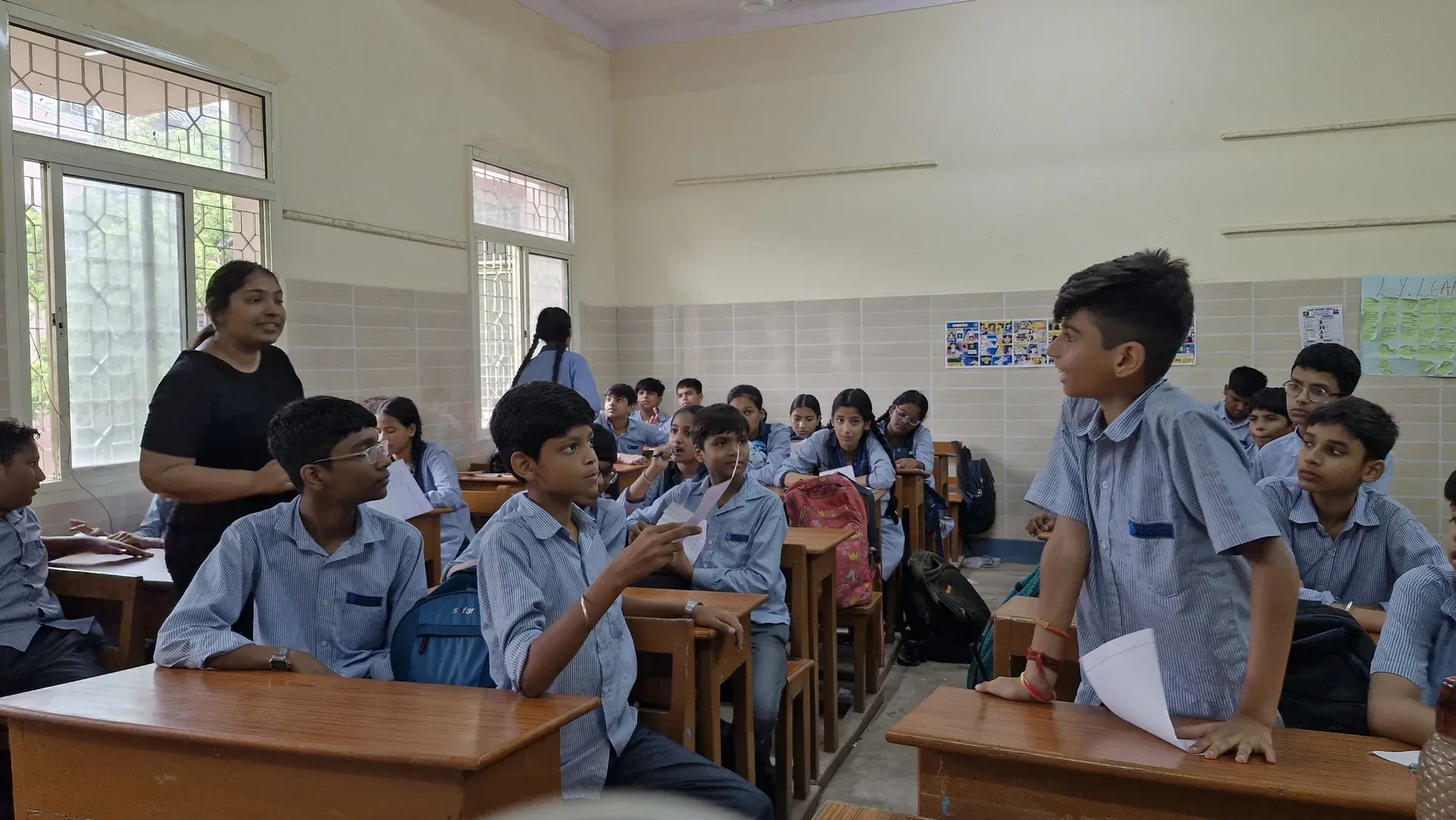
Through Akshara, Edspectrum Foundation creates structured opportunities for middle-school students to learn, practise, and use English across school and home.
Academic Year: 2026–27 (In Progress)
2026–27 (In Progress) Impact in Government and Low-Income School Communities
- 450Students Reached
- 5Partner Schools
- 950Classroom Sessions
- 2,553Teacher-Led Speaking Calls
- 1,000+AI-IVRS Calls
- 609Family Outreach Touchpoints
Who We Serve
Children with potential, but without fair access to English skill-building opportunities.
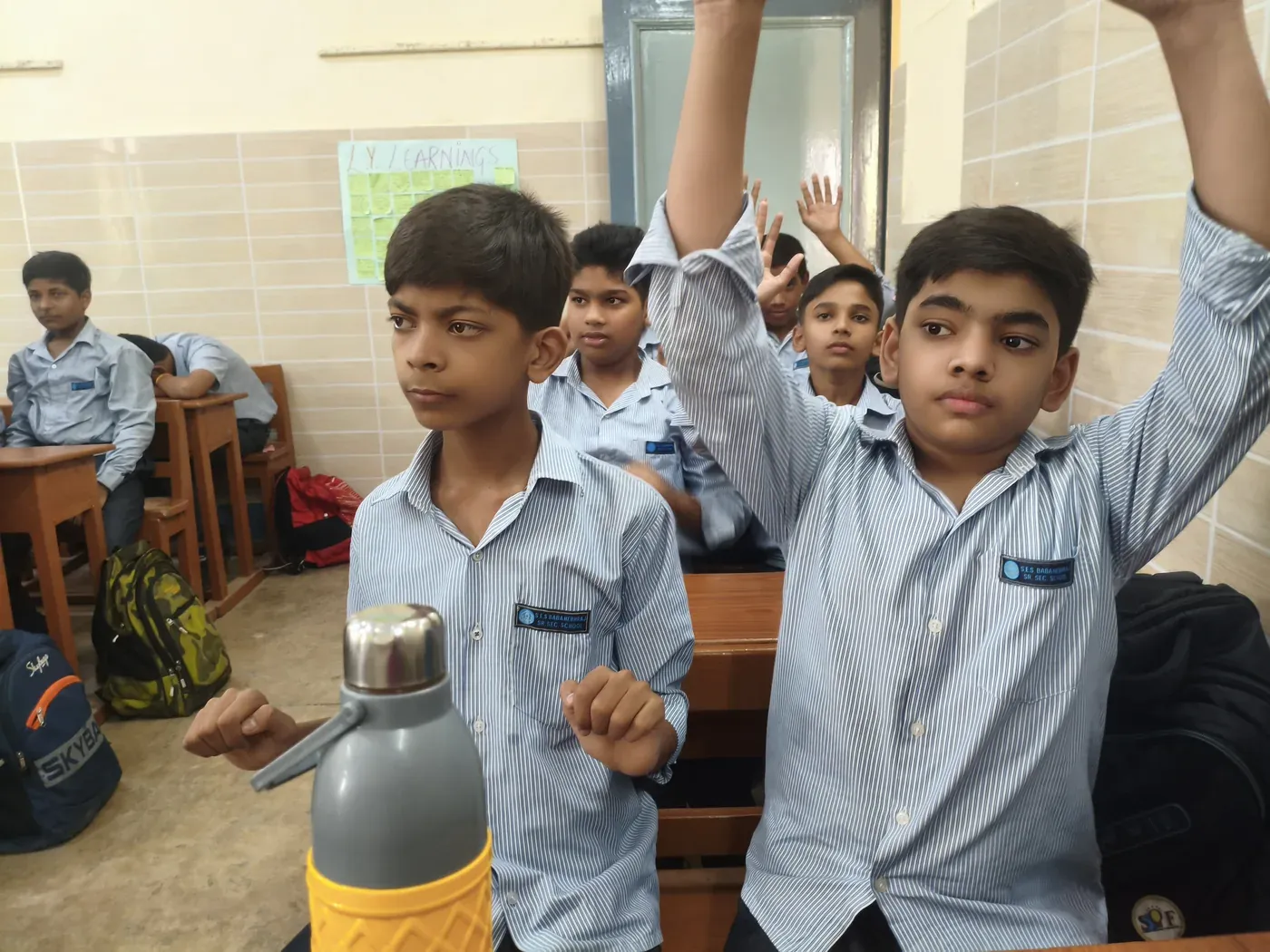
We work with middle-school students in Grades 6–10 from government and low-income school communities, especially children who are expected to learn through English but do not receive enough exposure, safe speaking practice, reading support, writing guidance, or opportunities to use the language confidently.
The Problem
English-medium admission is not the same as English access.
Many children are expected to learn through English, but regular exposure and meaningful opportunities to use the language can remain limited.
01
Exposure
English may be present in the timetable without being present enough in a child’s everyday learning experience.
02
Practice
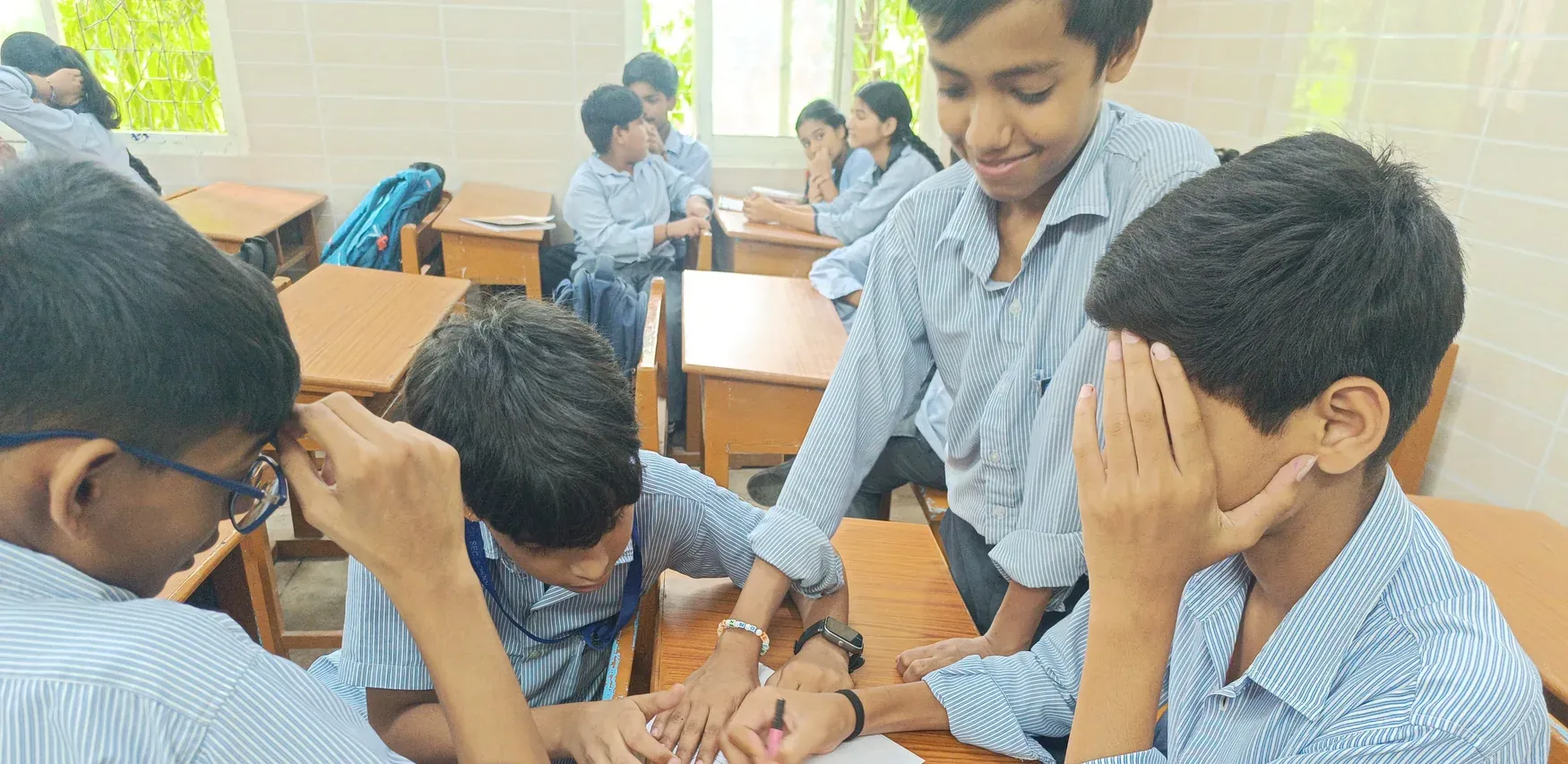
Children may copy answers, memorise words and complete notebooks without enough opportunities to speak, read, write and respond in English.
03
Participation
By middle school, the gap can begin affecting classroom participation, written expression, subject learning and confidence.
This is not a failure of children, parents, or schools. It is a system gap in access, exposure, practice, and support.
How Akshara Works
English practice does not stop at one classroom period.
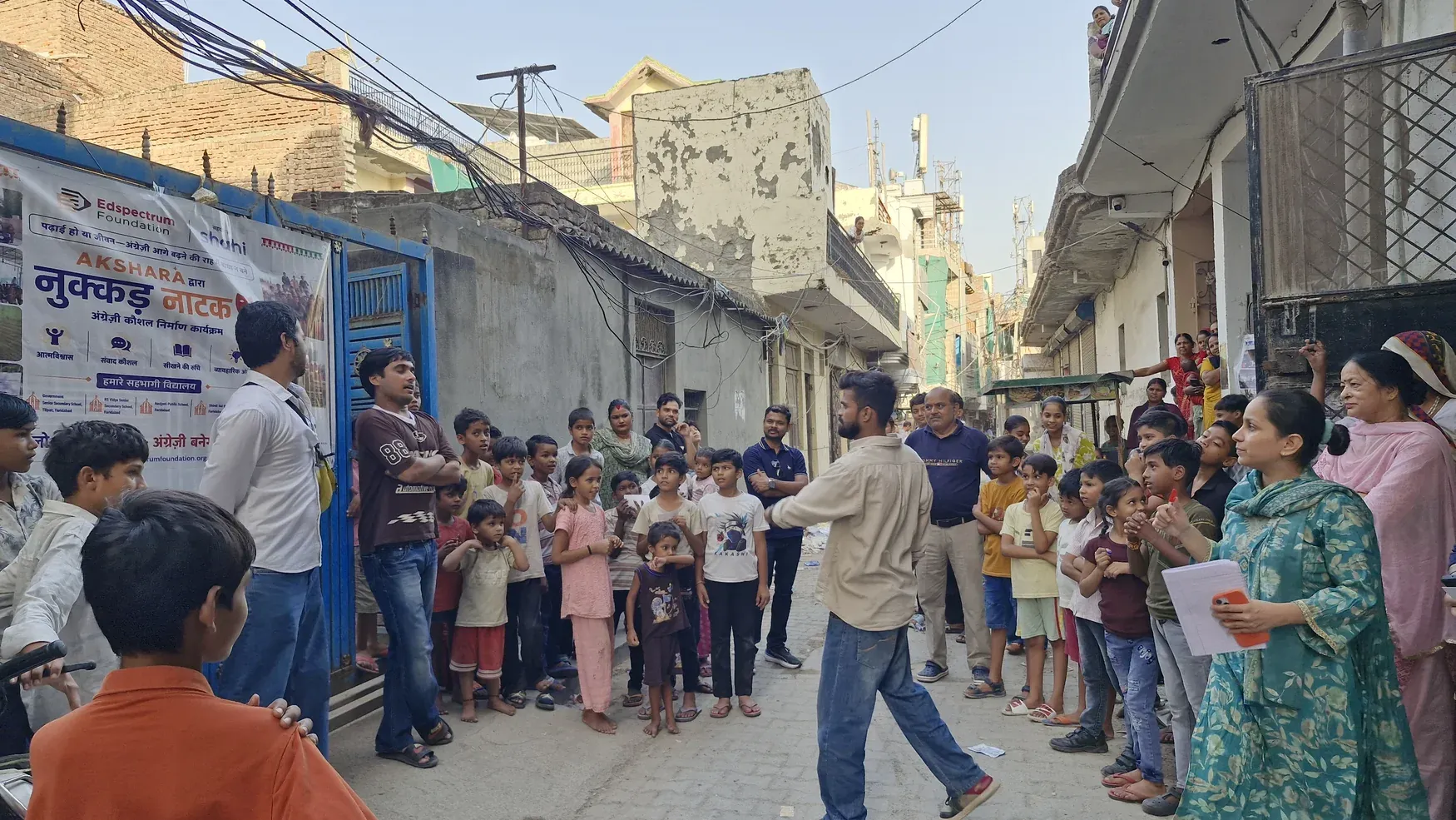
Akshara connects structured classroom learning with continued speaking practice, family support, and opportunities for children to use English publicly.
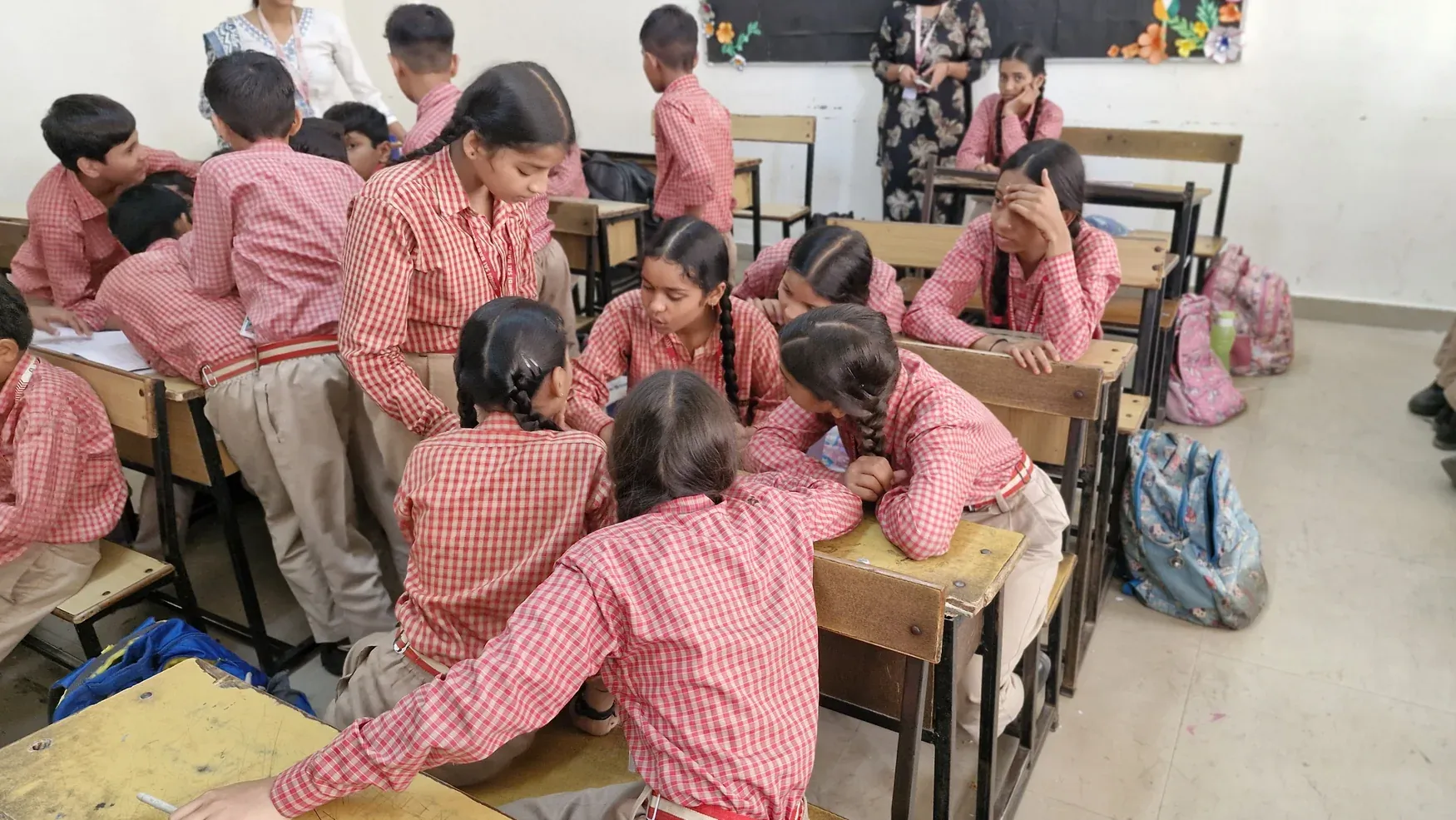
School
Classroom Learning
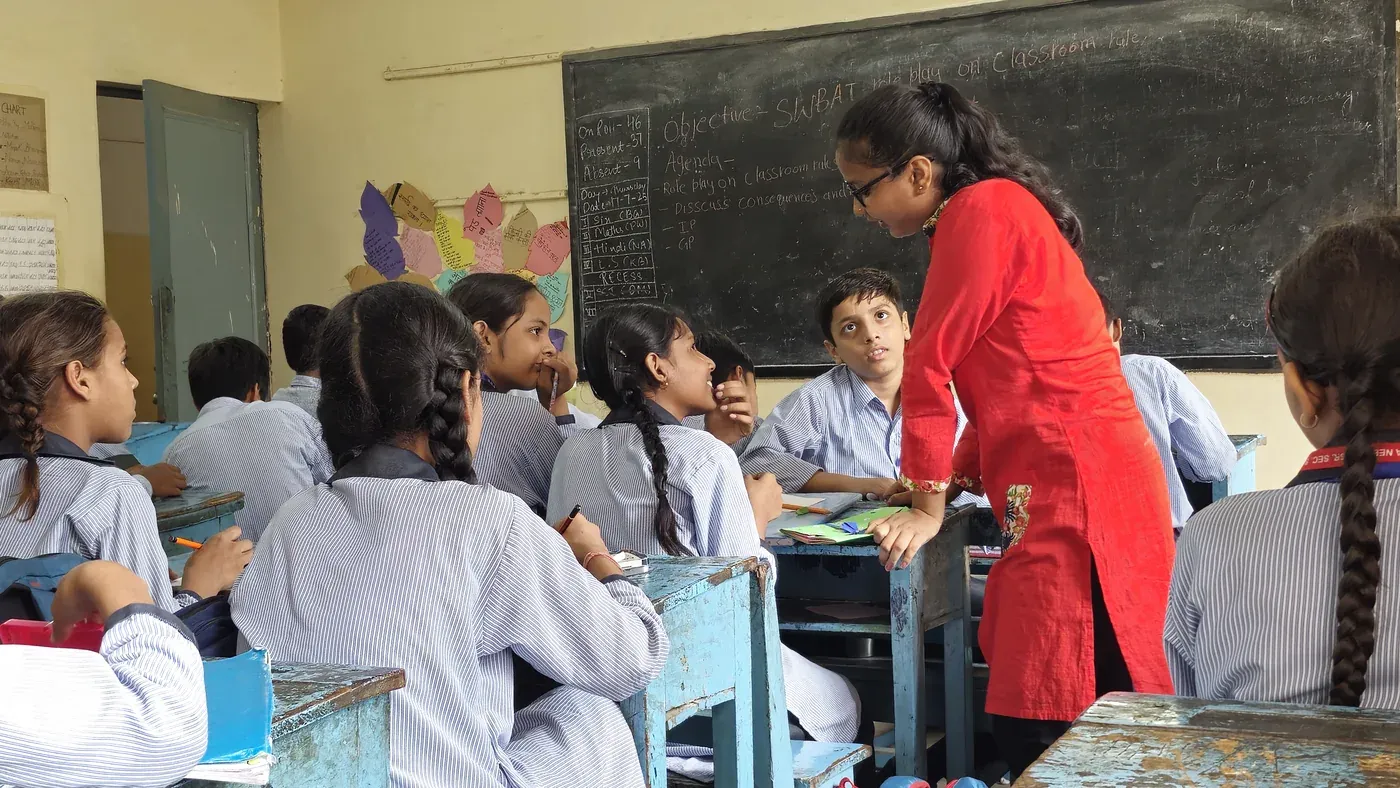
Structured listening, speaking, reading and writing practice through regular school-based sessions.
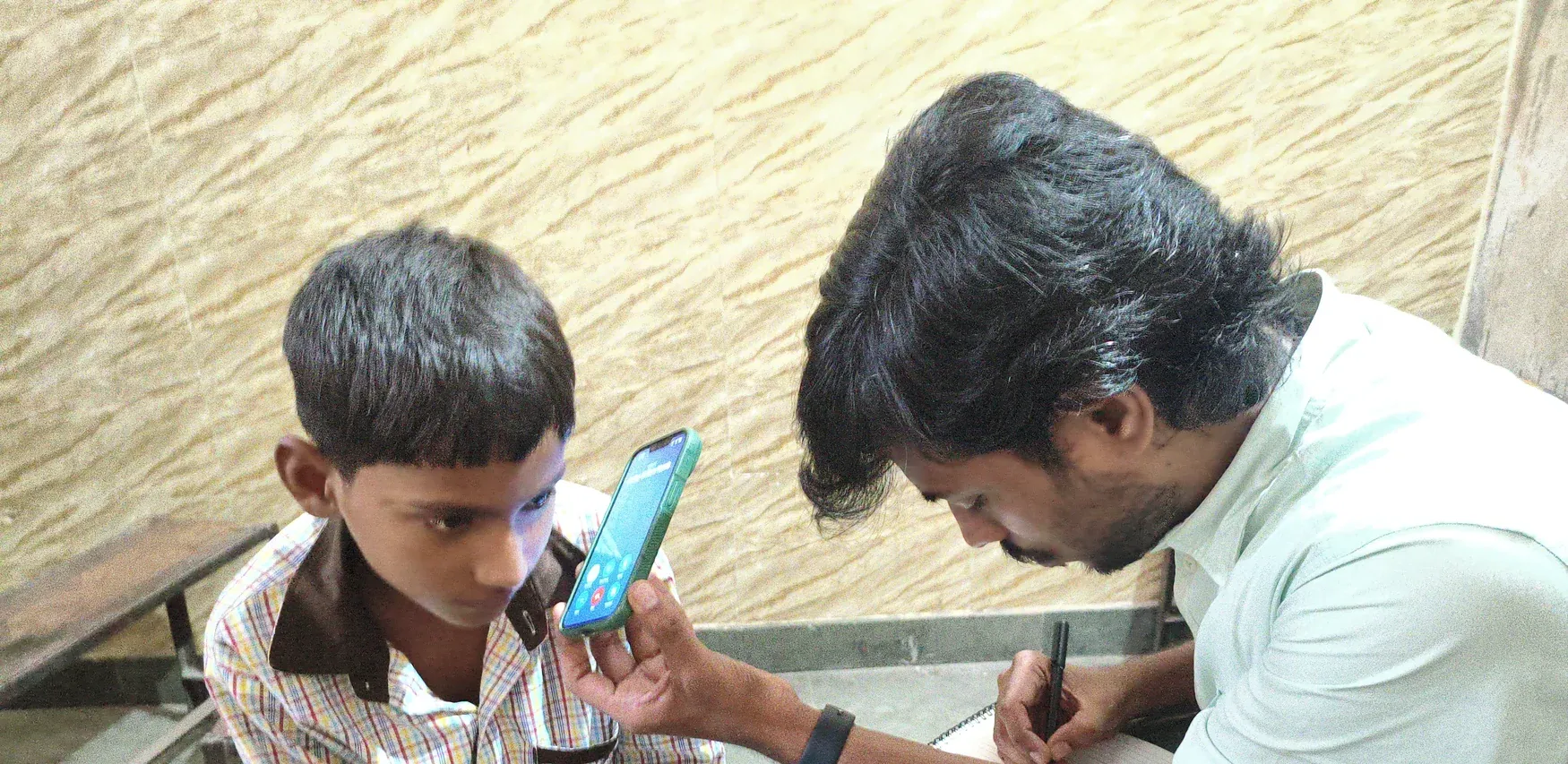
Beyond Class
Continued Practice
Teacher-led speaking calls and AI-IVRS-supported opportunities extend listening and speaking practice beyond scheduled classes.
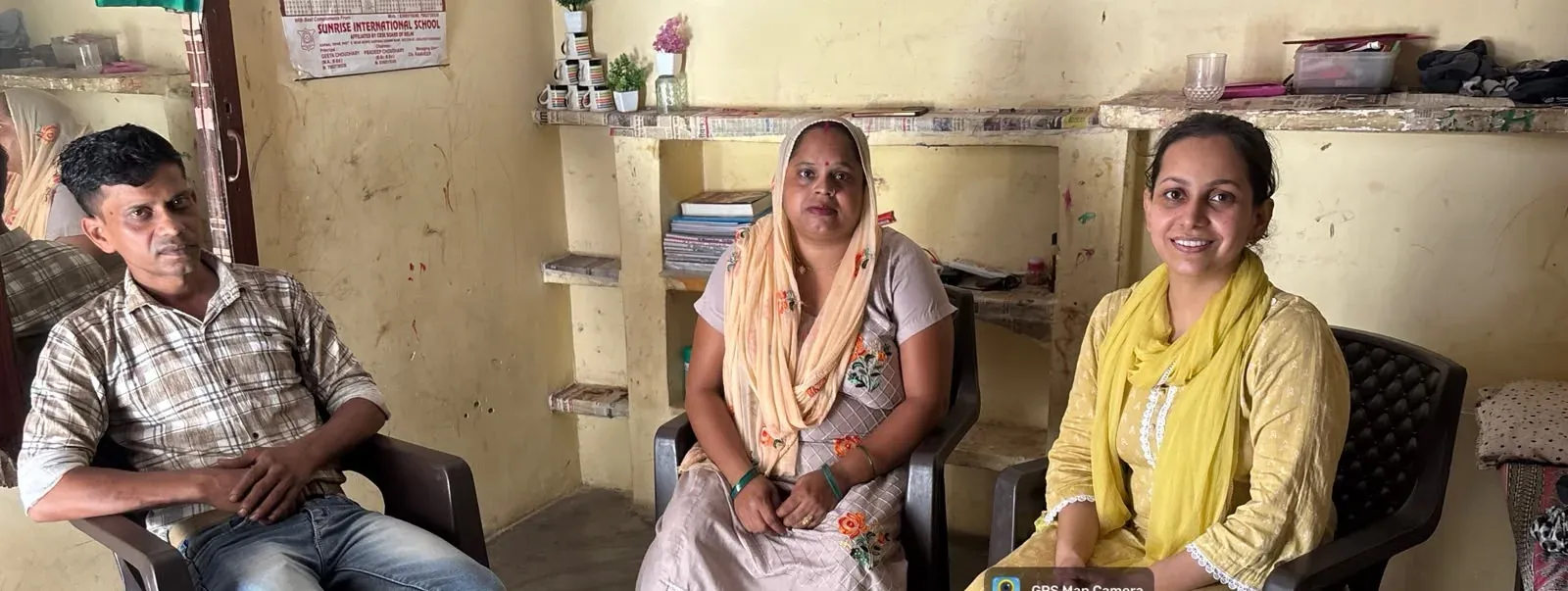
Home
Family Support
Home visits, calls and parent engagement reinforce attendance, encouragement and continuity of practice.
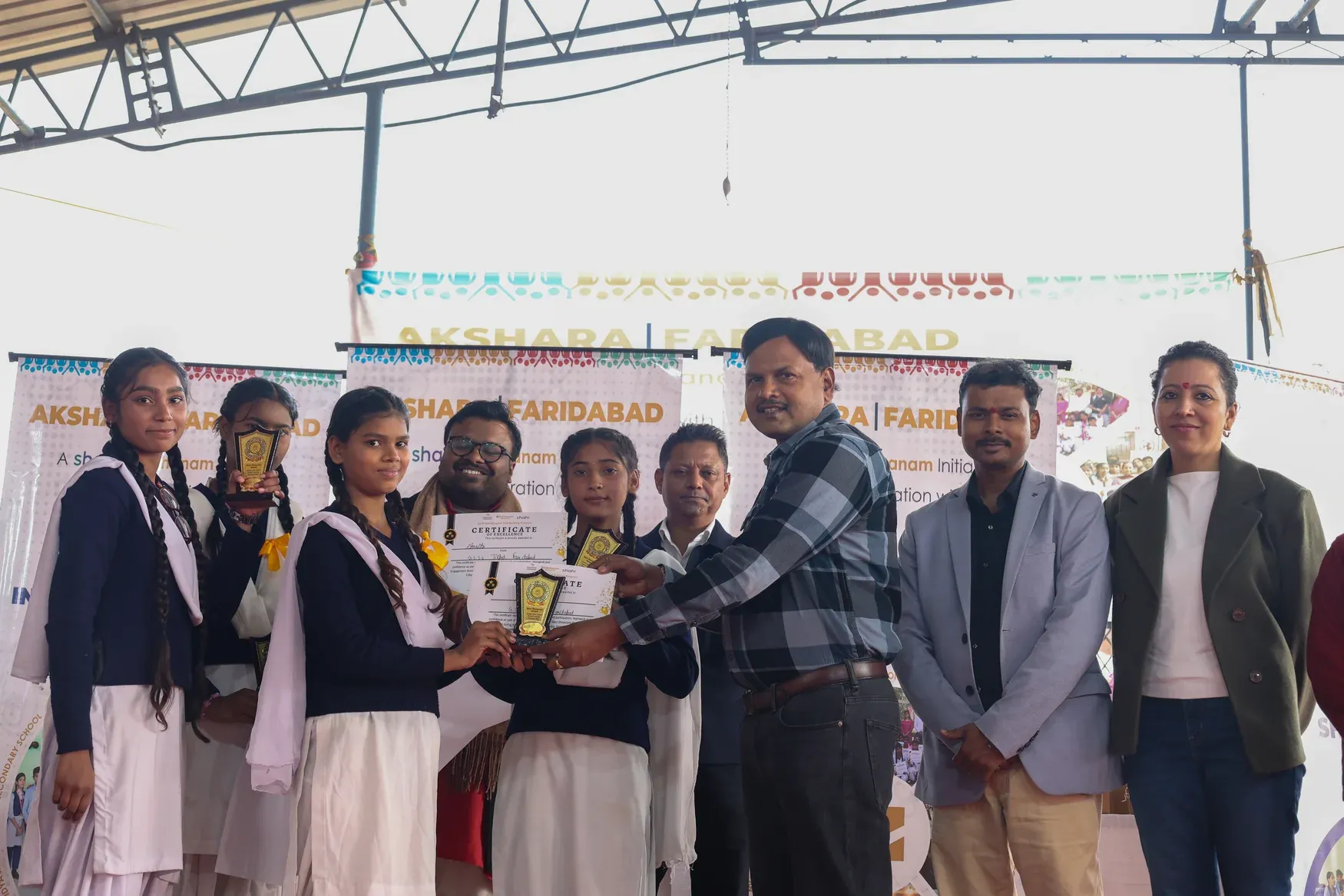
Public
Public Expression
Showcases create opportunities for students to explain, present and use English before peers, families and school communities.
These repeated opportunities are designed to support a gradual shift from comfort and participation toward greater confidence, ownership, and readiness for future learning.
What We Are Working Towards
A Progressive Journey of Language Growth
The pathway below describes the progression Akshara is designed to support. It is a program pathway, not a claim that every student moves through each stage at the same pace.
- Stage 01 of 07Starting Point
Listening comfort
Builds readiness forStage 02: Speaking attempts - Stage 02 of 07
Speaking attempts
Builds readiness forStage 03: Classroom participation - Stage 03 of 07
Classroom participation
Builds readiness forStage 04: Reading & writing engagement - Stage 04 of 07
Reading & writing engagement
Builds readiness forStage 05: Confidence & visibility - Stage 05 of 07
Confidence & visibility
Builds readiness forStage 06: English ownership - Stage 06 of 07
English ownership
Builds readiness forStage 07: Future learning readiness - Stage 07 of 07Target Outcome
Future learning readiness
Akshara Intended Program OutcomeReadiness Realised ✓
Our Work
Current Flagship Programs
Our flagship programs address two critical parts of a child’s learning ecosystem: children need access to meaningful skill-building, and parents need credible awareness to support them better.
Through Akshara, we build English skill-building access and capacity for children in government and low-income schools. Through Parents of India, we create credible, researched, and experience-led conversations that help parents make more informed choices for their children.
 Current Flagship
Akshara
- Access
- Capacity
Akshara builds English practice ecosystems across school and home so middle-school students can use English with confidence, visibility, and ownership.
 Current Flagship
Parents of India
- Awareness
Helping parents make informed choices through credible conversations on children, learning, development, and parenting.
Our Journey
Ecosystem Initiatives That Shaped Our Practice
Before Akshara and Parents of India became our current flagship programs, Edspectrum’s work across early childhood, content accessibility, school transformation, and capacity building helped shape how we think about children’s learning ecosystems.
 Earlier Ecosystem Initiative · 01
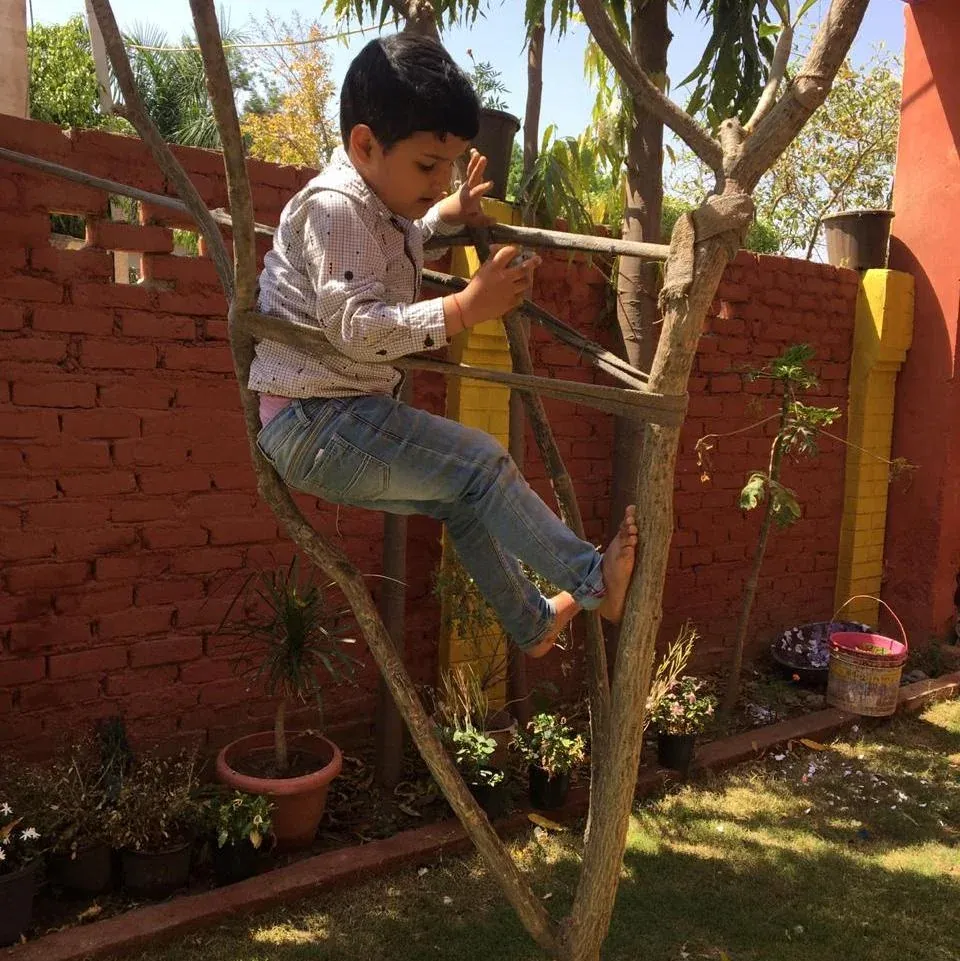
Cartwheel School
- Access
- Capacity
Early childhood learning that shaped our child-centred, physical approach to development and parent–school partnerships through sensory play, design, and life skills.
Explore in Our Work Earlier Ecosystem Initiative · 02
Project Setu
- Access
- Awareness
Language-access work that taught us how credible information must be usable in people’s real contexts.
Explore in Our Work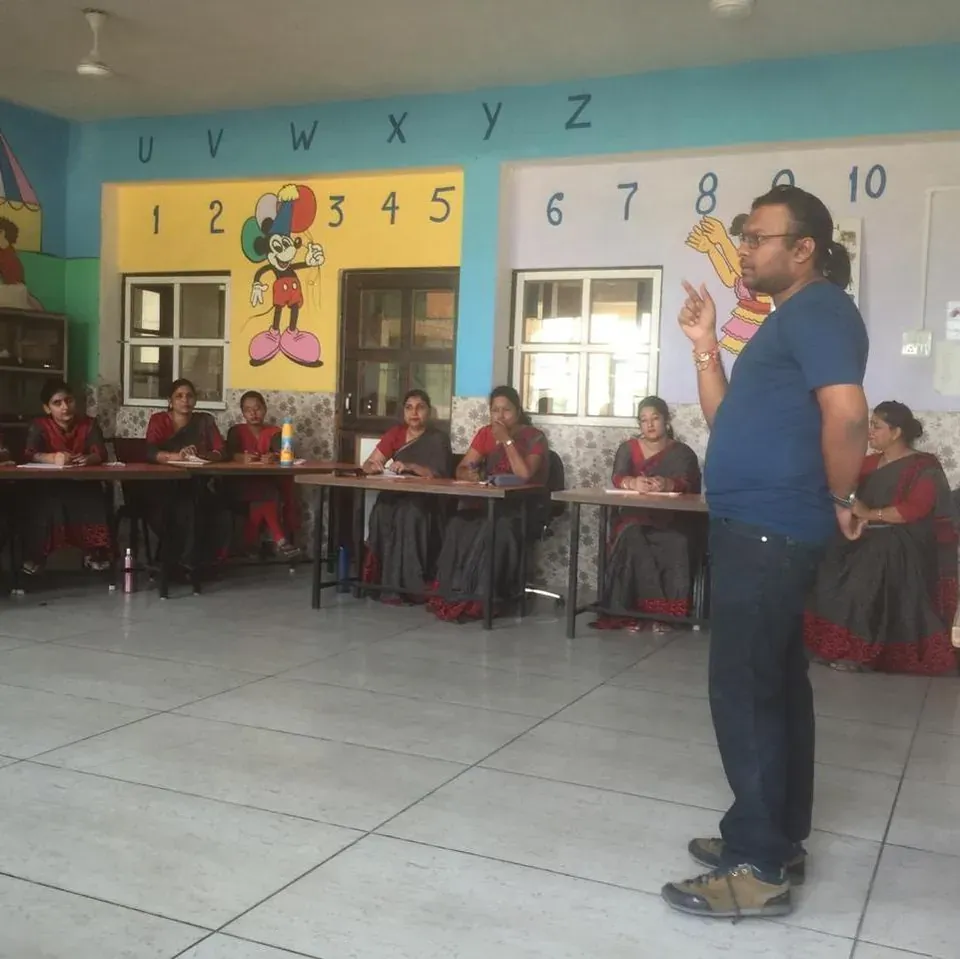 Earlier Ecosystem Initiative · 03
School Transformation and Teacher Capacity Building
- Capacity
Whole-school capacity building that shaped how we support teachers, leaders, and classroom practice.
Explore in Our Work Earlier Ecosystem Initiative · 04
Content and Capacity-Building Projects
- Awareness
- Capacity
Resource and skilling work that built our ability to design credible programs for diverse learner groups.
Explore in Our Work
Evidence of Change in 2025–26
Akshara's impact is tracked through delivery, practice, family engagement, public participation, and Baseline-to-Endline learning evidence. The figures below use the same canonical 2025–26 data presented on our Impact page.
Opportunity Access
- 450Students Reached
- 5Partner Schools
Children across government, government-aided, and low-income school communities received structured access to English skill-building support.
School-Home Practice
- 950Classroom Sessions
- 2,553Teacher-Led Speaking Calls
- 1,000+AI-IVRS Calls
These are delivery and practice counts: repeated opportunities created across classroom and beyond-class learning, not a stand-alone measure of learning causality.
Baseline-to-Endline Learning Movement
Writing
16.3444.30+27.96 points
Speaking & Listening
34.9155.60+20.69 points
Reading Comprehension
55.8068.35+12.55 points
These figures show movement within Akshara's 2025–26 assessment framework. They should not be treated as a universal measure of English learning outcomes.
Source: Akshara Baseline-to-Endline assessments and internal program tracking, 2025–26.
Family & Public Participation
Family outreach and learning showcases document the support and public-use opportunities created around students; they should be read alongside the assessment evidence above.
- 609Family Outreach Touchpoints
- 4Student Learning Showcases
Partnerships & Collaborations
Different relationships. Shared commitment to learning.
Edspectrum works with organisations in different ways across programs and periods. We show Akshara's flagship program partnership separately so that wider collaborations are not presented as though they have the same role.

Flagship Program Partner
Shahi Exports
Akshara English Skill Building Program
Shahi Exports is Edspectrum Foundation’s flagship program partner for Akshara, supporting the English Skill Building Program.
Across Our Work
Selected Collaborations
These organisations reflect selected collaborations across different Edspectrum initiatives and periods. Their inclusion here does not imply that each organisation is a current funder or partner of Akshara.
- MyGov India & NIC
 TagHive
 NASSCOM Foundation
 Uninhibited India
- Blue Lotus Advisory
 Baazi Games
 SR Capital Public School
 Garden Valley International School
Next Step
Help extend meaningful English access to more children.
If your organisation wants to support structured English learning, school-home practice, and evidence-led implementation in government and low-income school communities, explore an Akshara partnership with Edspectrum Foundation.